Sunday, November 27, 2011

An age-old problem

All have sinned and fall short of the glory of God. ~ Romans 3:23 (NIV)

      
Somewhere beneath all that mud and grease was my first-born. I cringed. I didn’t want him even to set foot in my clean house. When he was younger and showed up at the door looking like the mud monster of Smithport, I’d make him strip down to his underwear on the porch before I let him in. My house is my domain, and I alone determine who comes in and under what conditions.
   
Getting to heaven, God’s home, isn’t any different. So why do we think we can get there on our own terms and ignore God’s? I once thought that if my good deeds outweighed my bad ones, if I did everything my religion told me I had to do, or if I managed to keep from doing wrong, I’d get into heaven.

The problem is no matter how hard I try to be good, I somehow manage to do something that I know displeases God. Sometimes I choose to do wrong on the spur of the moment, like the time in high school when I cheated on a history quiz. Other times I sin without even thinking, like when I swore at the dog after I tripped over him and crashed into the cupboard. Excuses such as “It’s not my fault” or “I couldn’t help it” just don’t wash with a holy God.
   
On my own, I cannot be good enough to get into heaven. I can do nothing to remove the sin that too frequently stains my soul. Only a perfect sacrifice can do that (Hebrews 9:22). Jesus, God’s Son, was that perfect sacrifice. That’s why He came – to make me clean enough to enter heaven and solve that old sin problem once and for all.

   
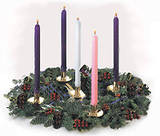
Dear God, as I light the first candle on my Advent wreath, I am reminded once again of why You sent Your Son to earth: to die so that I might live forever with You in heaven. Throughout this busy holiday season, help me not to forget it. Amen.


Special-Tea: Read Genesis 3:1-19

Sunday, November 20, 2011

Back to square one

But they who wait for the LORD shall renew their strength, they shall mount up with wings like eagles, they shall run and not be weary, they shall walk and not faint. ~ Isaiah 40:31(RSV)
      
      
For the past six weeks, the fatigue that’s plagued me for years has been quietly dissipating. Energy has slowly been reclaiming my body. Not bouncing-off-the walls energy, but an energy that’s been AWOL for far too long. I’ve actually felt like cleaning again! Glory hallelujah! I’m so ready for this health challenging year to be over.
      
But, alas, on Thursday (I’m writing this on Tuesday), it’ll back to square one as I undergo my third surgery in 11 months. Once again, I’m under doctor’s orders to take it easy for two to three weeks following the procedure. No driving for six weeks. Since I live 12 miles from town and winter’s setting in, I’ll be cooped up indeed.
      
But I’m not feeling sorry for myself. Honest. I’m thankful for the energy to clean my house and put two weeks’ worth of meals in the freezer so my husband won’t have to come home after an 11-hour day and make supper, like he did prior to and following my first two surgeries.
   
And on a bookshelf in my bedroom is a reading stack that I plan to devour during this forced downtime. I’ve also downloaded several novels and nonfiction books on my Kindle. Included are writers’ magazines and how-to books, as well as several novels in the genre I’m writing—historical fiction—so I can study and analyze how it’s done. My downtime will be productive time.
      
I’ve been spending a lot of time praying and thinking about what direction my writing will take after this is all over. I’ve been trimming my schedule, realigning my activities with what I believe is God’s purpose for me. He’s allowed me a glimpse of His plans, and they excite me because it’s something I’ve long desired. It seems as though God is saying, “The time is coming. Be patient. Wait.”
      
“After the first of the year” has become my mantra. After the first of the year, I can start driving again. After the first of the year, my third and final recovery period will officially be over. After the first of the year I’ll get back to my historical novel, submit more stories and articles for publication, begin outlining themes for women’s retreats.
      
God has refocused my vision. “Forget the former things,” He’s told me. “Do not dwell on the past. See, I am doing a new thing! . . . I am making a way in the desert and streams in the wasteland” (Isaiah 43:18?19 NIV).
      
Although I’m back to square one healthwise, it’s okay. Because whether the future holds sickness or health, prosperity or poverty, I’m in His hands and His plans.
      
And that’s the best place to be—even if I think it’s square one.
      
      
Thank you, God, for the blessed assurance that You, not I, am in control. Amen.
     
Special-Tea: Read Philippians 3:13-14; Habakkuk 2:3b

Monday, November 14, 2011

Not set in stone

If we confess our sins, he is faithful and just to forgive us our sins and to cleanse us from all unrighteousness. ~ I John 1:9 (ESV)
      
      
A diehard purist when it comes to the English language, I cringe when I pass one of those stones folks put in their front yards engraved with their last name—for example, “The Smith’s.”
      
Wrong! Wrong! Wrong! It should read “The Smiths” (no apostrophe).
      
I see it all the time, even from professional writers—the misuse of that confusing little curlicue to denote plural and not using it to denote possession. I have to quell the urge to get the biggest, fattest permanent marker I can find and go around, correcting all these errors, especially the one outside a town’s civic center that reads, “Mayors Office.” But I’d probably be arrested for defacing property.
       
Words painted on wood can be corrected, but what’s etched in a rock is permanent. Think about it—the mistake is literally set in stone.
      
I’m thankful the mistakes I make, in God’s eyes, are not set in stone. With God, they’re more like something written in pencil that can be erased.
      
Really?
      
Really.
      
The process goes something like this: I make a mistake—sin, do something I know is wrong. If it’s a sin, God, through the Holy Spirit, calls me on it. If I ignore the nudging, it nags at me until I name it, claim it, and ask forgiveness. God, in 1 John 1:9, promises to expunge it from my record. Note in that verse He doesn’t just forgive—He cleanses me from the sin and its resulting guilt.
      
If I just plain mess up, with no intention of wrongdoing, God can turn my blunders into something good: “And we know that God causes everything to work together for the good of those who love God and are called according to his purposes for them” (Romans 8:28 NLT).
      
I’m given a second chance. A clean record.
      
Don’t believe me? Then read about Jonah, who ran the other way when God called him to go to Nineveh. Or Aaron, Moses’ brother, who led the Israelites in crafting a golden calf to worship while Moses was on Mount Sinai getting the Ten Commandments. Or Paul, who persecuted the early Christians. Or Peter, who denied even knowing Jesus.
      
Jonah was given a second chance to preach to Nineveh. Aaron was named the first High Priest to head up the Temple service. Paul became a champion for the Christians, starting new churches wherever he could. And Peter became the leader of the first century church, the rock upon which Jesus said He would build His church.
      
No matter what you’ve done, no matter how deep the hole you find yourself in, know that in God’s eyes, your mistakes are not set in stone. He’s willing and waiting to give you a second chance. All you have to do is ask.
          
      
Thank you, Lord, that my gaffes and willful wrongdoings are not set in stone. Thank you for the many second chances You’ve given me. Amen.
      
Special-Tea: Read Jonah 1:1-3, 3: 1-3

Tuesday, November 8, 2011

On turning 60

However many years a man may live, let him enjoy them all. ~ Ecclesiastes 11:8
     
     
“You’re really making a big deal out of turning sixty,” my husband said last week when I brought up for the umpteenth time how I wanted to celebrate my sixtieth birthday.
      
“Yes, I am,” I said. “Because it’s a milestone, a watershed.”
     
It’s a milestone because I’ve made it this far with both sanity and body intact. I’ve been married to the same man for nearly thirty-eight years, and I still thrill at the sight of him. My three children are all productive members of society. Two have given us grandchildren. We own our home free and clear. All but one of our debts is paid off. It’s a milestone because I’ve reached the beginning of my golden years and retirement. I’ve already retired from teaching. I’ll probably write, edit, mentor, and speak until God calls me home—but at a pace I set myself.
     
My sixtieth birthday is a watershed moment because it marks a turning point in my life. The majority of my life is behind me. I want to spend the time I have left on love—loving life, loving people, doing things I love to do, spending time with the people I love. All my life I’ve been a people-pleaser. That’s what has shaped my schedule, defined who I was, been the beat to which I marched. I’ve said “yes” to things I should have said “no” to. And found myself with more on my plate than I could handle. I’ve been a clock watcher, a do-list checker-offer, because the clock and the do list drove me.
     
No more. Now I will drive the clock. Or throw it out. I’ve learned to say “no.” My do list is comprised of things I enjoy doing—cooking for my husband, reading, writing, preparing speeches, having lunch with a friend, playing games with my grandchildren, crocheting little afghans for the grandkids’ kitties, playing 500 Rummy with Dean, playing Scrabble with whoever will play me, growing a vegetable garden, watching the deer and the turkeys in the yard.
     
I still have dreams. I almost gave them up. On my refrigerator is the number 30. That’s the number of months until my husband retires. Well, until I say he retires. He doesn’t believe it. He thinks he’s going to have to work until he drops. But something’s changed. In me. An attitude, a way of thinking. No longer do I say to him, “If you retire.” I say, “When you retire.” I don’t just hope it will happen, I look for ways to make it happen.
     
At 60, I matter to me, because I know that I matter to God, and I always have mattered to Him. Every moment of my life has a purpose—even, and especially, in my golden years.
     
      
For you created my inmost being; you knit me together in my mother’s womb. I praise you because I am fearfully and wonderfully made . . . All the days ordained for me were written in your book before one of them came to be” (Psalm 139:13?14, 16 NIV). Thank you, Lord!


Wednesday, November 2, 2011

Dad's final gift

A special story in remembrance of my father, Peter Maddock, who died 40 years ago today.

   
We buried my dad on a peaceful hillside nestled among the river valleys of southwestern Pennsylvania on my twentieth birthday.  His battle with cancer was finally over, as was my struggle with the pain of watching him suffer.  The lonely valley of grief now stretched before me, and in order to heal, I had to traverse it alone.
   
How I’d searched for a tangible sign of his good-bye the night he died!  A radio mysteriously turned on – anything.  I had to know he was only on the other side of an invisible barrier, and all I needed to do was to tune in to some supernatural wavelength, and he’d hear me.  I wanted the assurance he’d be there when I needed him, as he’d always been in the past.
   
All I have left of Dad, I thought sadly, are memories.  I remembered when I was six years old and had wanted a brand new tricycle, not my older sister’s dented castoff.  Mom’s favorite answer always seemed to be “No,” but Dad’s was “We’ll see.”  Then one Saturday a shiny red and white tricycle awaited me on the backyard sidewalk, its matching streamers dancing in the wind, its chrome handlebars gleaming in the morning sun.
   
Dad always seemed to be able to look into my heart and understand my feelings.  I spent hours with him in his carpentry shop, riding many a sawdust trail on wooden horses while the table saw spewed more sawdust for me to sweep up.  I still love the smell of freshly cut lumber.
     
Our backyard became Sherwood Forest after Dad brought home a bow-and-arrow set.  He never got angry when I accidentally shot my arrows through the garage window instead of the target tacked on a hay bale beside it.  He just chuckled and patched up the window, gently cautioning me to be more careful.  I practiced until my arms were sore just to make him proud of me.  I lived for his praise.
     
Then came the day we had our first father-daughter battle.  I was in fourth grade and wanted to wear nylons like all the other girls.  I rarely saw him angry, but I did then.
     
“You’re going to wear bobby socks until you’re sixteen years old!” he stormed.  Wailing, I rushed upstairs to my room.  Mom must have intervened, for I got to wear the nylons.  He never said another word about it, but looking back that long, dark night he died, I suddenly understood: The shock of realizing his little girl was growing up had momentarily overwhelmed him.
     
Then there was the night he slapped me.  It was really just a little tap on the cheek, but I felt it deep in my soul.  I was late getting home from spending an evening with friends and had neglected to call.  Maybe I thought a fifteen-year-old high school junior didn’t have to check in all the time or that my parents wouldn’t worry.
     
Whatever the reason, it was nearly midnight when I finally got home.  Dad met me at the front door, fuming.  When I tried to explain, he tapped me on the cheek, silencing me immediately.  Once more I stormed up to my room.  This was a breach of faith.  He’d never raised a hand to me.  Until now.
     
Later I learned that he’d gone out searching the bushes along the route I should have taken home, imagining the worst.  It was I who had broken faith, not he.  How rich I was to have such a father’s love!
     
When he took up golf, I followed suit, taking lessons in high school and college, dreaming of the day we’d stroll the links together.
     
But it was not to be.  Dreams die hard when you’re twenty years old and have lost someone you’ve loved all your life.
     
Although I was relieved his ordeal was over, I couldn’t let him go yet.  Surely he’d give me some final good-bye.  But my search was in vain, my hopes crushed, when, after two long, grief-filled days and nights, nothing was amiss.  Feeling forsaken, I went to bed the night before Dad’s funeral, wrapping myself in a blanket of memories, hoping somehow they’d warm the chilling emptiness in my heart.
     
Then came the morning – my twentieth birthday.  What joy would there be for me in this day?  Or in any birthday I’d celebrate after this?  But something was different: Grief was gone.  In its place was peace, a peace so profound it was present in every molecule of the air around me and in every fiber of my being.  Love and joy were almost tangible, as if I could reach out and touch a warm, compassionate being who charged the atmosphere with a velvet-like presence.
     
It was as if Dad was there, assuring me he was in a place so beautiful, so peaceful, I didn’t need to grieve.  See where I am, Babe, I could almost hear him say, I’m free from pain, free from worry.  It’s all right.  Peace walked with me that day.
     
In the years that followed, when hope seemed but a whisper in the winds of trial, I’d remember Dad’s final gift – that glimpse of heaven – and I’d find the strength to go on.
     
I still often return, in my heart, to that quiet hillside where now both Dad and Mom are buried.  And another memory stirs in my consciousness: Dad sitting on the side of his bed at night, head bowed, eyes closed, hands folded.
     
“I am the resurrection and the life,” Jesus says in John 11:25.  “He who believes in Me, though he die, yet shall he live.”
     
And I know beyond a shadow of a doubt that my earthly father is with my Heavenly One.  Only with this Father, there is no invisible barrier separating us.  All I have to do is tune in to my heart.
      
(c) 2011 Michele T. Huey. All rights reserved.